Capezio

Women's Over-Shoe Ballet Warm-Up Booties

Women's Over-Shoe Ballet Warm-Up Booties

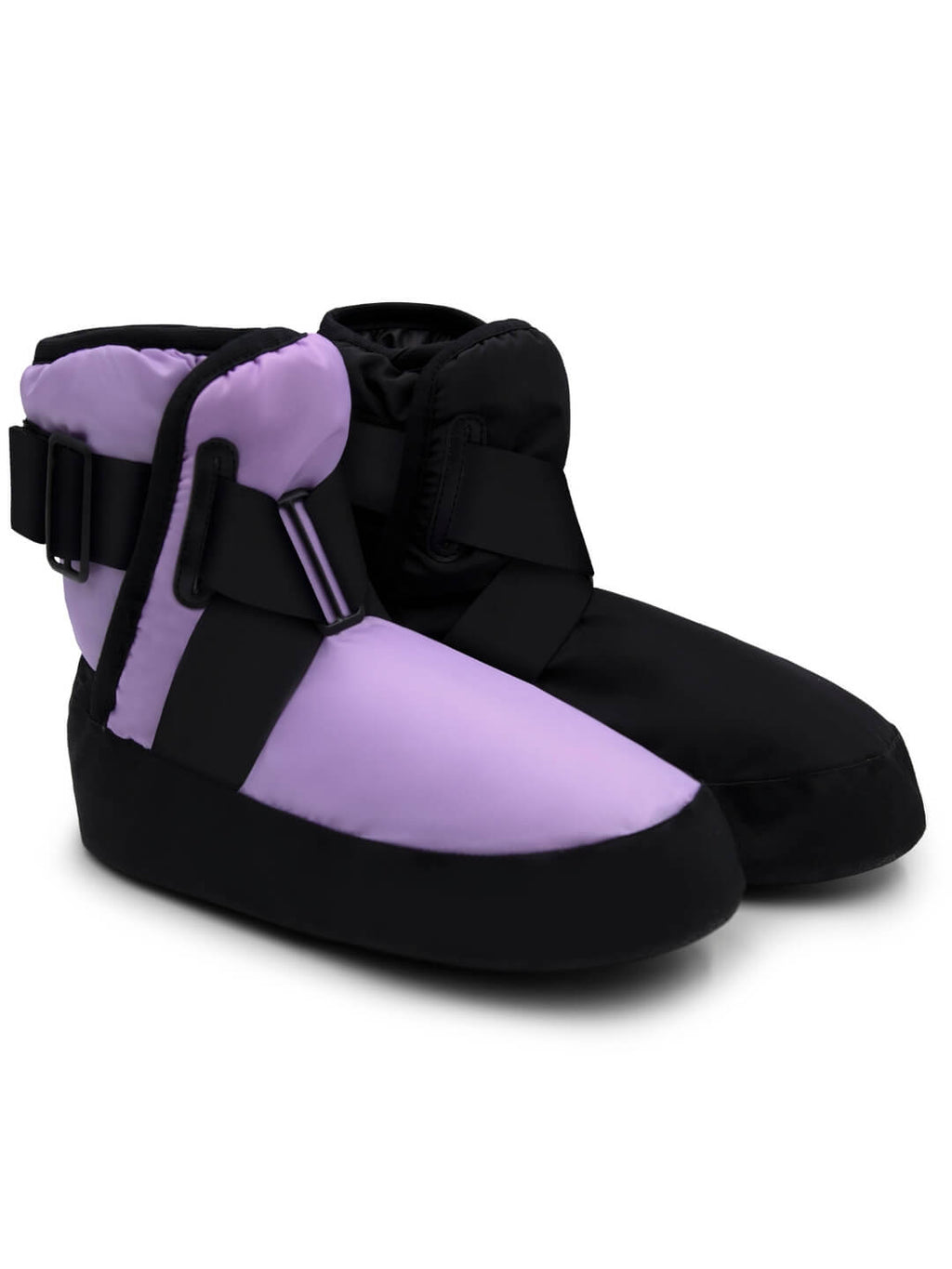
Women’s over-shoe ballet warm-up booties help keep feet warm before class and during rehearsal breaks. Designed to fit over ballet shoes, this warm-up footwear adds a layer of warmth without requiring you to remove your shoes between sessions.

FILTERS

0 ITEMS
GRID VIEW:
Women’s over-shoe ballet warm-up booties are insulated footwear designed to slip over ballet slippers, demi-pointe shoes, or pointe shoes, depending on the style and fit. They help retain warmth around the feet and ankles during breaks between classes, rehearsals, and stage calls. Their purpose is practical: to add a removable layer without requiring dancers to take off the shoes underneath. For a dancer moving from barre to a rehearsal break, or waiting backstage after completing a physical warm-up, that coverage helps limit heat loss during periods of reduced activity. Unlike fitted ballet footwear, over-shoe booties have a roomier shape that accommodates the shoe as well as the foot. Compatibility still matters, since a soft ballet slipper takes up less space than a structured pointe shoe. Booties intended for over-shoe use should provide enough interior room to avoid pressing against the shoe or crowding the toes. Coverage commonly extends above the ankle, while the height and opening vary by design. Some dancers use them throughout the pauses in a full rehearsal schedule; others keep a pair in their dance bag for the wait between technique class and a separate coaching session. Adult students, college dance majors, teachers, and working performers can all find a place for this layer in their studio routine. The benefit is warmth between active sessions, not additional support for ballet technique. Warm-up booties do not replace movement-based preparation, and they should come off before turns, jumps, pointe work, or other exercises that require direct contact between dance shoes and the floor. Their role is to support the transition between moving and waiting, helping dancers stay prepared without adding unnecessary steps to a busy schedule. That makes them distinct from everyday slippers or outdoor boots, which are not necessarily shaped to fit over dance shoes or intended for use around a studio.

Materials and construction determine how over-shoe ballet booties feel, fit, and hold up to repeated use. A woven synthetic outer shell can provide lightweight coverage, while an insulated or padded interior helps retain warmth. Smooth linings can make it easier to slide booties over ballet shoes, although the amount of space inside remains important. More padding is not automatically better if it compresses the foot or makes the bootie difficult to put on. The balance is room for the underlying shoe, comfortable coverage around the ankle, and a secure enough fit for permitted movement between waiting areas. A dancer wearing thin ballet slippers may need a different fit from someone wearing pointe shoes with toe pads and ribbons. For dancers seeking coverage over a structured shoe, warm-up booties for pointe shoes are a relevant category to consider alongside the intended size range and fit information. Pointe shoe length, box width, and heel shape all affect the space required inside a bootie. Sizing should therefore follow the individual style’s measurements or recommendations rather than an assumption that everyday shoe size will translate directly. Openings and closures also influence daily use. An adjustable opening can help manage coverage around the ankle, while a wide entry can simplify putting booties on without pulling at ribbons or disturbing shoe placement. Any closure should feel secure without creating pressure or restricting comfortable ankle movement. Underfoot construction deserves equal attention. Some booties have flexible textile soles, while others include more substantial sole panels or textured surfaces. These differences affect feel and wear, but no sole should be assumed suitable for every floor. Smooth corridors, stairs, and studio surfaces can require different precautions. Booties should stay out of active dance combinations unless an instructor specifically permits their use for a particular exercise. For waiting, seated preparation, and approved short transitions, a well-matched fit keeps their function straightforward: covering dance shoes without forcing the feet into a cramped position.

Repeated handling, contact with floors, and time inside a dance bag all influence the durability of ballet warm-up booties. Secure seams, a firmly attached sole, and closures that continue to work smoothly are useful construction details for dancers with frequent classes or rehearsals. Areas around the toe and heel may receive more friction when booties are worn over structured footwear, making adequate interior space important for both comfort and wear. Pulling a tight bootie forcefully over a pointe shoe can strain seams and disturb the shoe underneath. A roomy opening and careful handling help avoid unnecessary stress. Care should follow the instructions provided for the particular materials, since insulation, linings, sole components, and closures may have different cleaning requirements. Machine washing or tumble drying should not be assumed safe. When spot cleaning is permitted, attention to marked areas can reduce the need to clean the entire bootie. After use, opening the booties and letting them dry fully before packing helps prevent moisture from remaining trapped inside. They should also be kept away from direct heat unless the care instructions explicitly allow it. A separate washable bag can help keep floor-contact surfaces apart from clean tights, leotards, and other dance essentials. Indoor use generally places different demands on a sole than pavement or wet ground, so warm-up booties should not be treated as outdoor footwear unless specifically designed for that purpose. Checking for worn patches, loose stitching, or damaged closures helps dancers recognize when a pair no longer functions as intended. As a gift, over-shoe booties suit a dancer whose routine includes rehearsal breaks, backstage waits, or multiple classes in one visit. The most useful choice reflects the recipient’s dance shoes, required fit, and studio rules rather than appearance alone. With suitable materials, enough room over the shoe, and consistent care, ballet warm-up booties provide a practical layer that supports the pauses built into dance training and performance.

FAQ