Capezio

Compression Dance Socks

Compression Dance Socks

Find compression dance socks for a snug, supportive fit during practice and rehearsal. Browse the selection and compare sizing, coverage, and intended use to choose a pair that suits your training needs. Check each style’s fit guidance to select your size.

FILTERS

0 ITEMS
GRID VIEW:
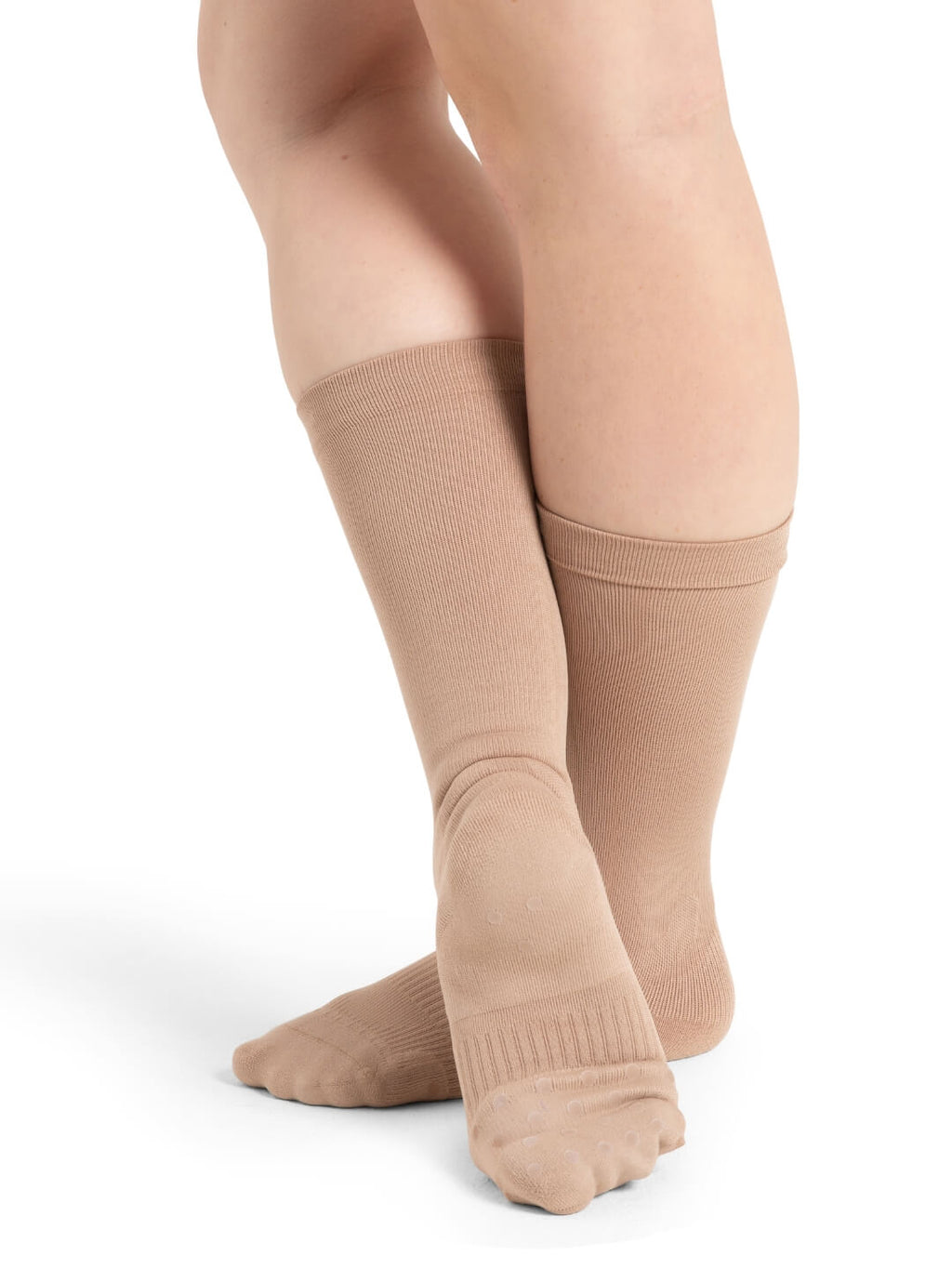
Compression dance socks provide a close, supportive fit around the foot, ankle, or lower leg while allowing the movement dance requires. Unlike everyday socks, they use stretch and knit construction to create a more held-in feel through selected areas. The amount and placement of compression vary by design, making coverage, fabric weight, and intended use important distinctions within this category. For dancers moving through repeated combinations, sustained balances, and long rehearsals, a secure sock can help keep fabric from shifting or gathering underfoot. Targeted compression through the arch can provide a supported feel without the bulk of a separate wrap, while a flexible forefoot allows the toes to spread and articulate. These qualities can be useful across contemporary, modern, jazz, and other training settings where socks are permitted. During a contemporary phrase, the fabric needs to follow a pointed foot, stay secure through a flex, and remain smooth as the dancer moves into floorwork. During technique practice, a close fit helps limit distracting folds beneath the ball of the foot. Compression alone does not determine how a sock performs on the floor, however. Sole construction, surface texture, and any traction features affect the balance between sliding and stopping. A sock that moves easily across one studio floor may behave differently on another. Dance compression socks should suit the class, the surface, and the movement rather than simply offer the strongest possible squeeze. Styles intended for active dancing also serve a different purpose from compression hosiery intended for rest or medical use. Claims about improved circulation, reduced soreness, or faster recovery depend on the product and its tested compression level. For everyday studio use, the most practical benefits are a secure fit, flexible support, and fabric that stays comfortable through repeated movement. They can serve dancers at different experience levels, provided the fit and floor performance match the demands of the session.

Materials shape how compression dance socks stretch, manage moisture, and hold their fit over time. Nylon and polyester are common performance fibers because they can create lightweight, durable knits, while elastane supplies the stretch and recovery needed for a close fit. Fiber content alone does not tell the whole story. Knit density, panel placement, seam construction, and fabric thickness all influence how the sock feels once a dancer starts moving. Breathable sections and moisture-managing fabrics can help limit a damp feeling during extended practice, although performance varies with construction and use. A smooth toe seam can reduce rubbing, particularly when the sock is worn inside an appropriate dance shoe. Reinforced heels and toes can help withstand repeated contact, while cushioning may soften the feel under pressure points. Extra padding also adds volume, so more cushioning is not automatically the better choice. A thin, close-fitting sock may work better where shoe space is limited or clear floor contact is important. Compression should feel firm and even, not restrictive. Toes need room to extend and spread, and the ankle must remain free to point and flex without fabric bunching across the joint. A heel section that sits in place helps maintain alignment, while a cuff should stay secure without digging into the leg. Shorter coverage leaves more of the lower leg uncovered; taller coverage changes where the fabric applies pressure and how much material sits beneath rehearsal clothing. Sizing may depend on foot measurements, leg measurements, or both, so the stated size information matters more than a familiar everyday sock size. Choosing a smaller size to increase compression can create excessive pressure instead of better support. Numbness, tingling, or a change in skin color are reasons to remove the socks, not signs that compression is working. When worn with dance shoes, the combined fit matters. Added fabric should not crowd the toes, alter heel security, or interfere with articulation. Socks should not be added to carefully fitted pointe shoes without guidance from a qualified fitter.

Durability matters because dance socks experience more than ordinary walking. Repeated pivots place stress beneath the forefoot, floorwork creates friction across the top and sides, and pulling a tight sock on by its cuff can strain the fabric. Resilient stretch, secure seams, and reinforcement in high-contact areas contribute to a sock that holds its shape through regular training. Care also affects that performance. The care label should determine washing and drying methods, since heat, harsh treatments, and some laundry additives can affect elastic fibers or specialized traction finishes. Gentle handling helps preserve the structure that creates compression. Pulling socks on gradually, rather than stretching them sharply from the opening, helps distribute tension through the fabric. Allowing them to dry fully between wears supports comfort, and rotating pairs gives each pair time for washing and drying. Thinning fabric, loose cuffs, persistent slipping, or worn sole details can signal that the original fit or floor response has changed. That response deserves attention before a demanding combination. Traction features are not interchangeable: some are designed to increase grip in selected areas, while other constructions allow more glide. Neither approach guarantees control on every surface, and excessive grip can interrupt a pivot just as excessive sliding can disrupt a landing. Studio rules and the teacher’s footwear requirements remain part of choosing suitable practice socks. Dancers focused on technique work can also explore Ballet Training Socks for related training options. Compression dance socks can make a practical gift for a student, an adult returning to class, or a performer with an established rehearsal routine, especially when the recipient’s size and preferred coverage are known. Matching those preferences is more useful than guessing at compression strength. Whether worn for a short technique session or a full rehearsal schedule, the right pair should stay secure, preserve foot articulation, and deliver predictable contact with the floor. That combination keeps the focus on movement rather than repeated adjustments.

FAQ